
Why inclusive aesthetic care is becoming a bigger issue in Melbourne clinics
 Core Aesthetics
Cosmetic medicine is often discussed in terms of trends, techniques and appearance. Far less attention is paid to the experience of the consultation itself: who feels welcome, who feels judged, and who walks away because the room does not feel safe enough to speak honestly. In Melbourne, that question is becoming harder to ignore as more patients look for care that reflects not only clinical standards, but also dignity, privacy and respect.
For LGBTQI+ people, and particularly for trans and gender-diverse patients, aesthetic care can sit at a complicated intersection of identity, self-expression and vulnerability. A consultation about facial balance, skin or injectables may also involve deeply personal questions about how someone wants to be seen in the world. That does not mean every LGBTQI+ patient is seeking gender-affirming outcomes, or that sexuality and gender identity should define the clinical encounter. It means assumptions can do real harm, and that the tone of a consultation matters as much as the treatment plan.
This is not simply a matter of bedside manner. It goes to the heart of informed consent, realistic expectations and patient safety. If a person feels they need to edit how they speak, avoid correcting a practitioner, or accept language that does not fit them, the consultation is already compromised. In an industry where outcomes depend heavily on communication, trust is not a soft extra. It is part of competent care.
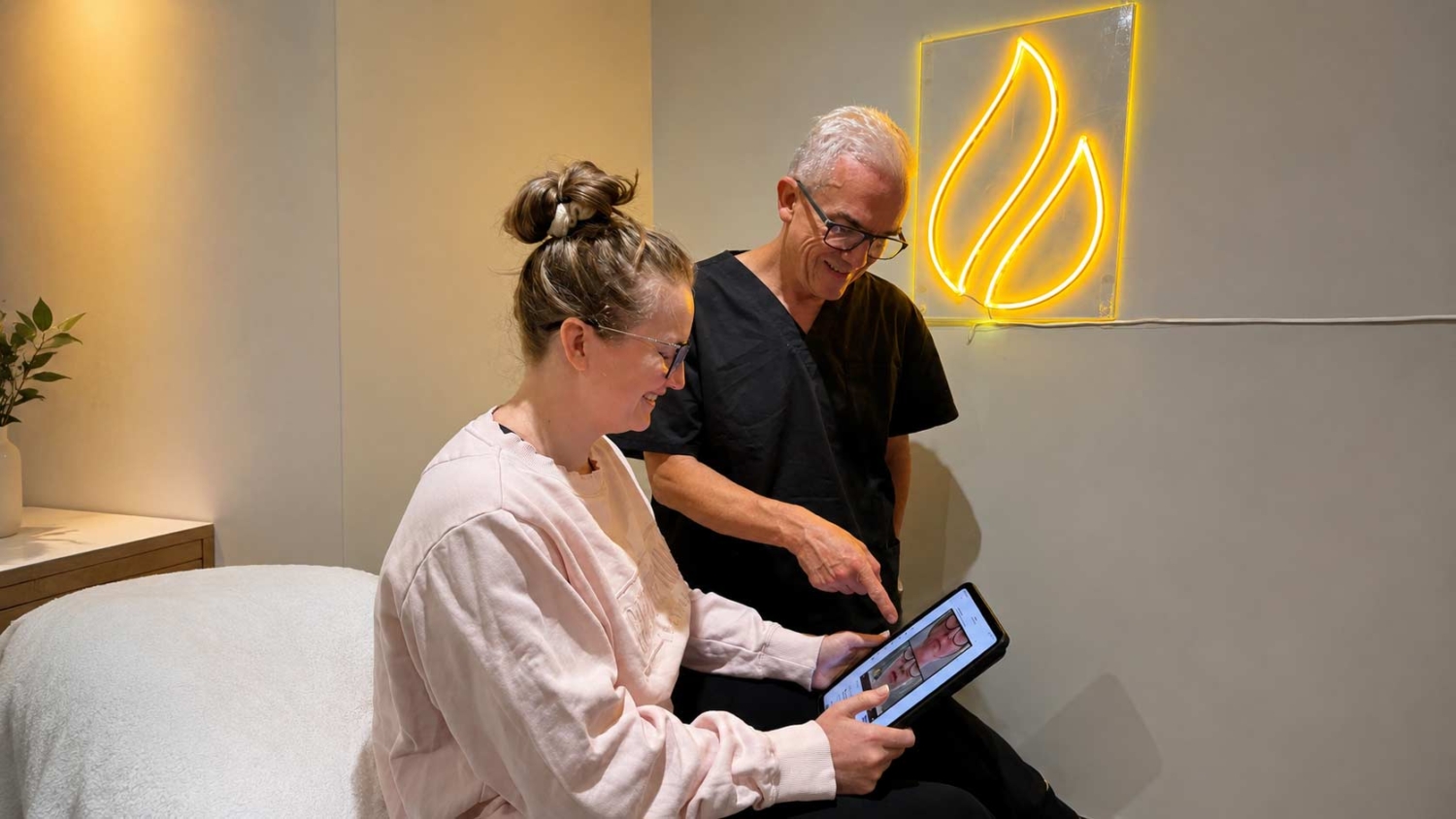
That broader shift is beginning to shape how some clinics present themselves and how they work behind closed doors. One local example is Core Aesthetics in Oakleigh, where registered nurse Corey Anderson has developed consultation processes intended to support LGBTQIA+ inclusive cosmetic consultations in Melbourne. The significance of that approach is not that inclusivity has become a marketing theme, but that more patients are asking for something basic and overdue: a consultation where they are not required to defend or explain who they are before discussing care.
“Every consultation starts by understanding the individual in front of us rather than making assumptions,” says registered nurse Corey Anderson of Core Aesthetics. “Everyone’s goals are different. Our role is to listen, provide honest information and make sure every person feels respected and able to make an informed decision, whether or not treatment is ultimately the right choice.”
The consultation is where inclusion either happens or fails
In aesthetic medicine, the consultation carries unusual weight. Unlike emergency care or routine pathology, this is a setting where patients are often discussing confidence, self-image and expectations in highly personal terms. The practitioner needs to understand what the patient wants, what is clinically appropriate, and what should not be promised. That process breaks down quickly when assumptions enter the room.
One of the most common mistakes in healthcare settings is to treat identity as visible and obvious. It is not. Gender, sexuality and treatment goals cannot be reliably inferred from appearance, voice, clothing or relationship status. In cosmetic settings, that can lead to subtle but damaging missteps: using the wrong pronouns, framing treatment around conventional ideas of femininity or masculinity, or assuming a patient wants to “correct” features that may in fact be important to their identity.
Respectful language is therefore not a political add-on to clinical care. It is practical. It helps the practitioner gather accurate information, reduce misunderstanding and create the conditions for genuine consent. Patients are more likely to speak openly when they are not bracing for judgement. They are also more likely to say no, ask questions or slow the process down when the environment makes that feel acceptable.
That matters in a field where restraint is often more important than enthusiasm. A good consultation should not steer patients toward treatment at all costs. It should clarify options, explain limits and make space for uncertainty. For patients who have had negative experiences elsewhere, that space can be the difference between feeling pressured and feeling respected.
Privacy and discretion are not luxuries
For many patients considering aesthetic care, privacy is a practical concern. For LGBTQI+ patients, it can carry additional weight. Some are navigating family, workplace or community environments where disclosure feels risky. Others may simply not want intimate discussions about appearance or identity to become visible in a waiting room, on a form, or through casual conversation with staff.
Discretion in this context is not only about confidentiality in the legal sense, though that is essential. It also includes how a clinic handles intake forms, names, pronouns, communication preferences and the basic choreography of appointments. Does the patient have to repeatedly correct staff? Are personal questions asked with care and relevance? Is the setting private enough for someone to speak frankly about their goals? These details can seem small to people who have never had to think about them. To others, they determine whether the clinic feels usable at all.
At Core Aesthetics, the emphasis on private, consultation-led care reflects that reality. The clinic’s public information, including its pages on trans and gender-diverse cosmetic consultation, signals an awareness that patient comfort starts before any procedure is discussed. In practice, that kind of positioning matters because it reduces the burden on patients to test whether a clinic will be respectful. It tells them, in advance, that they may not need to educate the room before receiving care.
There is also a broader lesson here for the sector. Clinics often focus heavily on visual branding and treatment menus while underestimating the operational side of inclusion. Yet for patients, the administrative and interpersonal experience is often what they remember most clearly. Privacy is not only what happens in the treatment room. It is built through systems, language and culture.
Realistic expectations are part of respectful care
One of the tensions in aesthetic medicine is that patients may arrive with very personal hopes, while practitioners have an obligation to stay grounded in what is appropriate, ethical and achievable. Inclusive care does not mean saying yes to everything. In many cases, it means being especially careful not to overpromise to someone who may be attaching significant emotional meaning to a treatment outcome.
That is why informed consent matters so much in this discussion. A respectful consultation acknowledges the patient’s goals without exploiting vulnerability. It explains what a treatment may involve, what it cannot do, and why suitability has to be assessed on clinical grounds rather than desire alone. It also recognises that some patients are not looking for dramatic change. They may want subtle refinement, or they may simply want to explore options without pressure.
For LGBTQI+ patients, this can be especially important because mainstream beauty language does not always fit. Not everyone wants to move toward a stereotyped aesthetic ideal. Some want softer changes. Some want stronger definition. Some want features to read differently in social settings. Some are not seeking identity-related outcomes at all. The key point is that treatment goals should come from the patient’s own articulation of self, not from the practitioner’s assumptions about what they “should” want.
This is where consultation-led care earns its value. It slows the process down. It allows the practitioner to test understanding, clarify motivation and set realistic boundaries. That is not only safer; it is more humane. In an industry often criticised for speed and sales pressure, the ability to pause is a sign of maturity.
What clinics can learn from a more inclusive model
The growing focus on inclusive care in aesthetics reflects a wider expectation across health services: patients want competence that includes cultural and interpersonal awareness, not just technical skill. That does not require clinics to become experts in every identity category. It does require them to stop treating neutrality as enough. A clinic can be unintentionally exclusionary while believing it treats everyone the same.
In practice, improvement often begins with simple changes. Intake processes can be reviewed to avoid unnecessary assumptions. Staff can be trained to use respectful language and to apologise briefly and move on if they get something wrong. Consultations can be structured to ask open questions about goals rather than framing outcomes through gendered templates. Privacy protocols can be examined from the patient’s point of view, not merely from a compliance perspective.
Core Aesthetics offers one local example of how that shift can look. Led by Corey Anderson RN, the Oakleigh clinic presents itself less as a place of transformation and more as a setting for careful discussion, suitability assessment and respectful care. Readers wanting to understand the practitioner’s background can find that context on the clinic’s team page and professional information via its verification details. That kind of transparency matters because trust in aesthetic medicine is built not only on credentials, but on whether patients believe they will be listened to.
What patients should look for before booking
For readers considering aesthetic care, the first useful question may not be “What treatment do I want?” but “What kind of consultation do I need?” A clinic’s website, language and booking process can reveal a great deal. Does it speak in rigid ideals, or does it leave room for individual goals? Does it mention consultation, suitability and informed decision-making, or only outcomes? Does it appear to understand that privacy and respect are central to care?
Patients should also feel entitled to ask practical questions before attending. How are personal details handled? Can communication preferences be noted? Is there time allocated for discussion? What happens if the practitioner decides treatment is not appropriate? These are not awkward questions. They are signs that a patient is taking their own care seriously.
In a city with no shortage of aesthetic providers, the clinics that stand out may increasingly be those that understand something simple: people are not only choosing treatments. They are choosing environments. For LGBTQI+ patients in particular, that environment can shape whether a consultation feels empowering, neutral or quietly alienating.
Readers who want to explore a private, respectful consultation can contact Corey Anderson RN at Core Aesthetics in Oakleigh via the clinic’s contact page or visit Core Aesthetics to discuss suitability, expectations and options. The larger point, however, extends beyond any one clinic. As aesthetic medicine becomes more mainstream, the real measure of progress may be less about what treatments are available and more about who feels safe enough to ask the first question.
 Core Aesthetics