
In Melbourne’s fast-moving cosmetic market, the most important step may be the one before treatment
 Core Aesthetics
Melbourne’s population is growing rapidly, and so is the volume of health and beauty information competing for people’s attention. In that environment, cosmetic decisions are increasingly being shaped by short videos, search results and before-and-after imagery rather than by the slower process of clinical assessment. That matters because non-surgical cosmetic procedures occupy a unique space. They are often discussed like lifestyle choices, yet they still involve health considerations, informed consent and patient safety obligations.
The timing is significant. The latest regional population figures released by the Australian Bureau of Statistics in March 2026 show Greater Melbourne is now home to more than 5.4 million residents, making it Australia’s fastest-growing capital city. At the same time, new national guidelines governing non-surgical cosmetic procedures are now in effect, placing greater emphasis on patient welfare, practitioner information and responsible communication. Ahpra has also reported about 360 notifications relating to non-surgical cosmetic procedures between September 2022 and March 2025, highlighting the growing focus on standards across the sector.
For patients, the message is not simply that regulations are evolving. It is that the way cosmetic care is presented, discussed and understood is changing. The question is no longer just what treatment is available. Increasingly, it is whether people are receiving enough information, context and professional assessment to make an informed decision before any treatment is considered.
Why the consultation is becoming the real point of difference
One of the tensions in modern cosmetic care is that demand often begins with a highly specific request. A person may arrive asking about jaw tension, facial volume changes, excessive sweating or expression lines because that is the language they have encountered online. But a symptom, concern or aesthetic goal is not the same thing as a diagnosis, and it is not a treatment plan.
That gap between consumer language and clinical reasoning is where consultation becomes critical. A proper assessment can reveal that a concern is being influenced by several factors at once: anatomy, muscle activity, skin quality, facial proportions, lifestyle factors, ageing, or expectations that may not match what treatment can realistically achieve. In other words, the consultation is not an administrative prelude to the “real” service. It is often the most important part of the service.
This is also where public misunderstanding can creep in. Cosmetic care is sometimes discussed as though suitability is obvious and universal. In practice, two people with the same visible concern may need very different advice. One may be suitable for treatment. Another may be better served by waiting, monitoring the issue or considering a different approach altogether.
A regulatory shift is forcing the industry to slow down
Australia’s regulators have been signalling that cosmetic procedures should not be marketed or discussed as though they are casual retail purchases. Ahpra’s updated guidance on cosmetic procedures reflects a broader move towards clearer practitioner accountability, stronger patient protections and more caution around how services are promoted to the public. The new cosmetic procedure guidelines sit alongside the Therapeutic Goods Administration’s rules on advertising a health service, which are designed to reduce misleading claims and curb pressure-based messaging.
That shift has practical consequences. Clinics are being pushed to communicate more carefully about what they do, what they can say publicly and how they frame patient decision-making. For consumers, that may feel like a loss of simplicity. The old social media model rewards certainty, speed and transformation. Regulation, by contrast, rewards nuance, disclosure and restraint.
One practical outcome of this shift is a greater emphasis on transparency around practitioner credentials and registration. Patients are increasingly encouraged to verify who will be providing their care, understand the qualifications of the practitioner involved, and confirm registration details where applicable. Some clinics have responded by making this information more accessible through dedicated practitioner verification resources, helping patients make more informed decisions before booking a consultation.
But that tension may be healthy. A market that asks fewer simplistic questions can make room for better ones: What is causing the concern? What are the limits of treatment? What are the risks? Is treatment necessary? What happens if someone does nothing for now? Those are not barriers to care. They are part of informed care.
What patients often miss when they research cosmetic concerns online
Many people begin their cosmetic journey by researching a single issue in isolation. They might search for wrinkle treatment, jaw slimming, volume loss or sweating management and expect a straightforward answer. The problem is that the body does not organise itself into neat search categories. Aesthetic concerns are often interconnected, and what appears obvious in a mirror or on a screen may be more complex in person.
Take facial movement and lines. A patient may focus on one wrinkle, but the relevant discussion may involve muscle activity, balance across the face, skin condition and the way ageing changes overall proportions over time. Jaw tension may involve discomfort, clenching, muscle activity and visible shape changes. Facial volume loss may not be a single-site issue at all, but part of a broader structural change. Excessive sweating, meanwhile, can affect daily comfort and confidence, yet still requires careful assessment rather than a generic response.
The practical lesson for patients is that researching a concern is useful, but it is not the same as understanding it. Information can help people ask better questions. It should not encourage them to self-prescribe a cosmetic outcome.
Questions patients should ask before cosmetic treatment
As cosmetic procedures become more widely discussed online, patients can benefit from asking a few simple questions before proceeding with any treatment:
- What is causing my concern, and has it been properly assessed?
- Am I a suitable candidate for treatment?
- What are the realistic benefits and limitations?
- What are the risks, side effects and recovery considerations?
- Are there alternative approaches available?
- What happens if I decide not to proceed with treatment right now?
- How can I verify the qualifications and registration status of my practitioner?
While the answers will vary from patient to patient, these conversations form an important part of informed consent and responsible cosmetic care.
How one Oakleigh clinic is responding
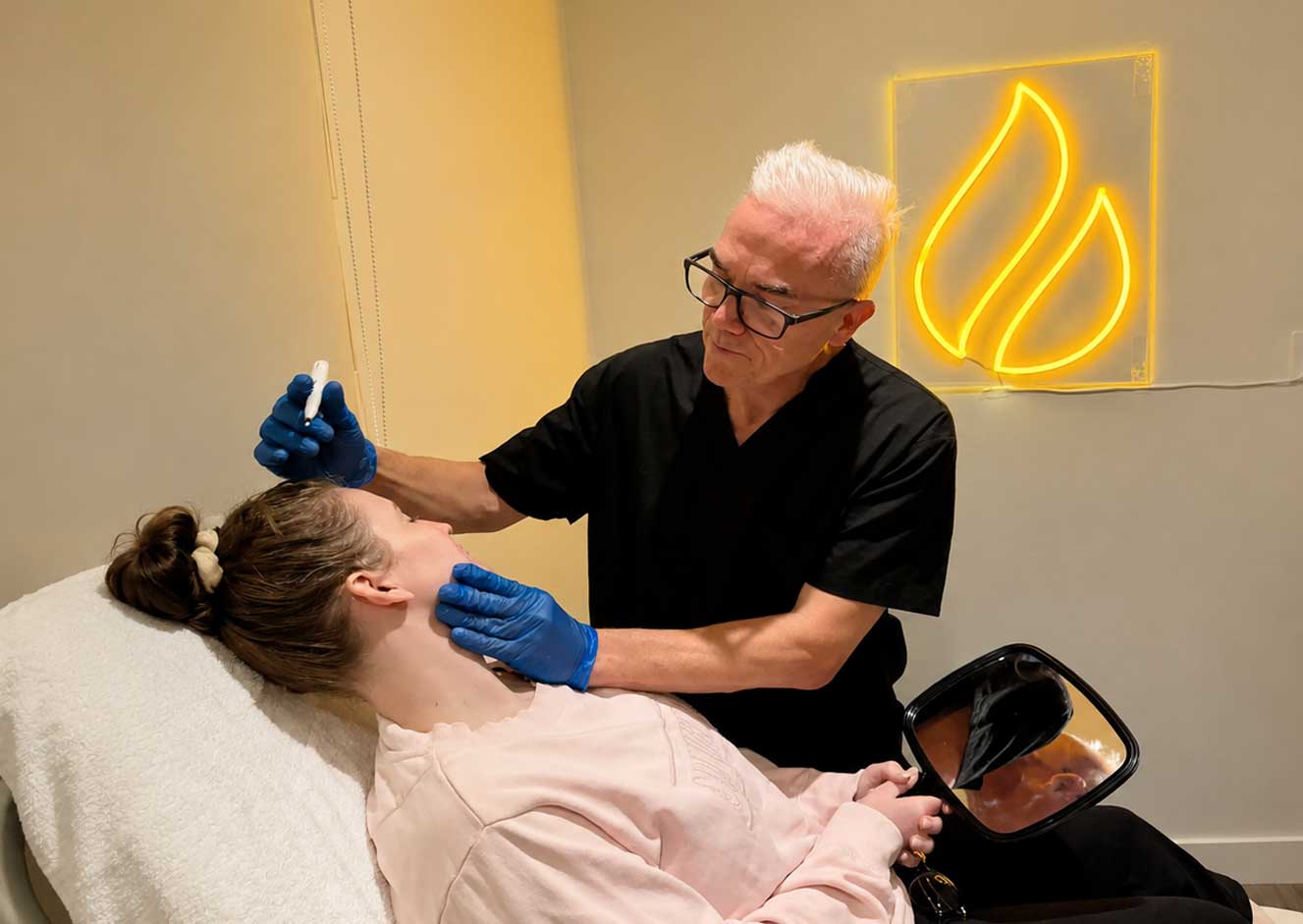
In Melbourne’s south-east, Oakleigh-based Core Aesthetics is positioning consultation as the centre of cosmetic decision-making rather than as a brief step before treatment. Founded by Corey Anderson RN, Core Aesthetics in Oakleigh has built its public education around a simple distinction: education first, treatment discussion second, and only where assessment suggests treatment may be suitable. The clinic also provides a practitioner verification page where patients can access information about practitioner identity and registration as part of its transparency focused approach.
“We believe patients deserve clear information, honest conversations and realistic expectations,” Anderson says.
That philosophy is notable not because it is dramatic, but because it runs against the incentives of trend-driven cosmetic culture. The clinic’s approach acknowledges that sometimes treatment may be appropriate, and sometimes the better advice is to wait, monitor a concern or explore alternatives. That is a more restrained message than the one many consumers encounter online, but it is arguably more consistent with the direction regulators want the sector to take.
Anderson puts it more plainly: “Good aesthetic care is not about pressure. It is about helping people understand their options, the limits of treatment and whether any next step actually makes sense for them.”
From treatment menu to decision framework
One of the more interesting developments in the sector is the move away from presenting cosmetic care as a menu of isolated interventions. Core Aesthetics uses what it calls the CORE Method, a four-stage framework covering consultation, organisation of contributing factors and options, refinement of a personalised approach, and evaluation over time.
Frameworks like this matter because they change the order of the conversation. Instead of starting with a treatment category and working backwards to justify it, they begin with the patient’s concern, context and suitability. That may sound procedural, but it has a broader implication: it treats informed consent as an active process rather than a formality.
In a sector where many people arrive with a preconceived idea of what they want, a structured consultation can also help reduce disappointment. Unrealistic expectations are not always the result of vanity or poor judgement. Often they come from incomplete information. The more a patient understands what is driving a concern and what treatment can and cannot do, the better the decision is likely to be.
What this means for Melbourne patients now
For a growing city, the challenge is not a lack of cosmetic options. It is an abundance of them, presented through channels that do not always distinguish clearly between education, advertising and entertainment. That makes patient judgement more important, not less.
For Melbourne patients considering non-surgical cosmetic care, the practical takeaway is straightforward. Start by looking for a consultation process that leaves room for questions, context and the possibility that no immediate treatment may be recommended. Be cautious of messaging that reduces a health service to a trend, a quick fix or a one-size-fits-all solution. And remember that suitability is individual, even when the concern appears common.
Core Aesthetics in Oakleigh provides consultation-led cosmetic treatment planning for Melbourne patients who want professional assessment before deciding whether treatment is appropriate. Patients in Oakleigh and Melbourne’s south-east who want to discuss their concerns directly can arrange a consultation with Corey Anderson.
The broader point extends beyond any one clinic. As regulation tightens and public scrutiny increases, the cosmetic sector may be entering a more mature phase, one where the most responsible providers are not those who make treatment feel easiest, but those who make decision-making more careful. In that setting, the consultation is not a delay before action. It is the safeguard that helps ensure action is worth taking at all.
About Core Aesthetics
Core Aesthetics is a consultation-led cosmetic clinic located at 12A Atherton Road, Oakleigh VIC 3166, serving patients across Melbourne’s south-east. The clinic is led by Corey Anderson RN. Patients can learn more about consultation appointments and practitioner verification at coreaesthetics.com.au.
 Core Aesthetics